Raksha Bandhan
Celebrating the Eternal Bond Between Brothers and Sisters
Protection Promise
The sacred thread symbolizes a brother's vow to protect his sister throughout life
Sibling Love
Celebrates the pure and unconditional love between brothers and sisters
Gift of Love
Exchange of gifts symbolizes the sharing of happiness and blessings
About Raksha Bandhan
Raksha Bandhan, also known as Rakhi, is a cherished Hindu festival that celebrates the beautiful bond between brothers and sisters. The name translates to "the bond of protection," symbolizing a brother's lifelong commitment to protect his sister.
This auspicious festival typically falls on the full moon day of the Hindu month of Shravana (July-August). Sisters tie a sacred thread called "Rakhi" around their brothers' wrists, praying for their well-being, while brothers pledge to protect their sisters and give them gifts as a token of their love.
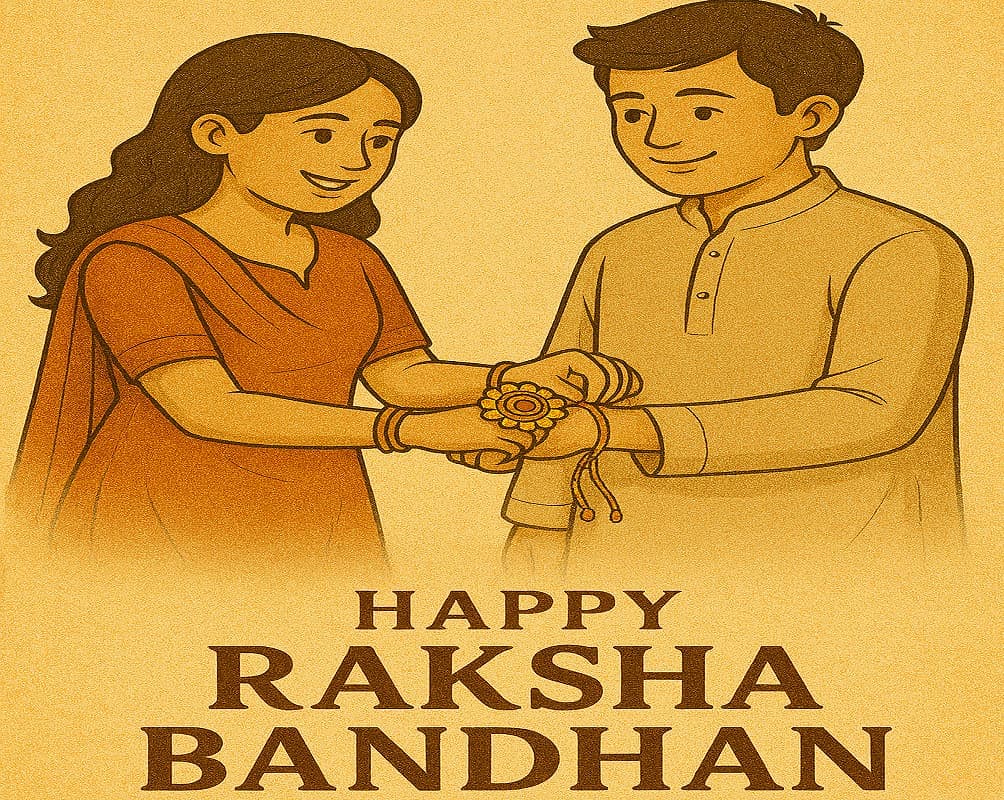
Happy Rakhi
Raksha Bandhan Traditions
Puja Preparation
Sisters prepare the puja thali with Rakhi, rice, sweets, diya, vermilion, and flowers. The thali is decorated beautifully with love and devotion.
Rakhi Tying Ceremony
Sisters tie the sacred thread while chanting prayers for their brothers' well-being, applying tilak, and performing aarti.
Gift Exchange
Brothers give gifts to sisters as a token of their love and protection promise. Gifts can range from sweets to jewelry or thoughtful presents.
Festive Feast
Families prepare special meals and sweets like ladoos, barfis, and traditional dishes to celebrate the occasion together.
Significance of Raksha Bandhan
Protective Bond
The Rakhi thread symbolizes a sacred promise of protection that transcends time and distance, reinforcing the brother's role as a protector.
Family Unity
Raksha Bandhan strengthens family bonds, bringing together relatives and reinforcing traditional values of love and responsibility.
Universal Brotherhood
The festival extends beyond biological siblings to celebrate all protective relationships, promoting social harmony and universal brotherhood.
Cultural Heritage
Raksha Bandhan preserves ancient Indian traditions and cultural values, passing them down through generations.
Raksha Bandhan Gallery
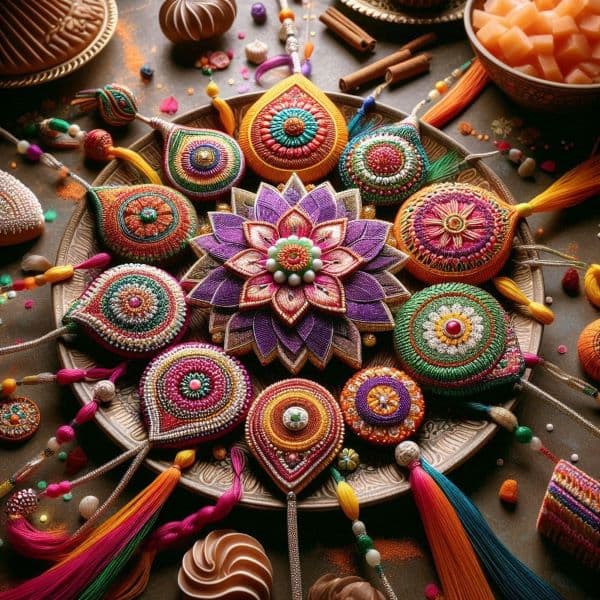
Rakhi Designs
Beautiful and intricate Rakhi designs
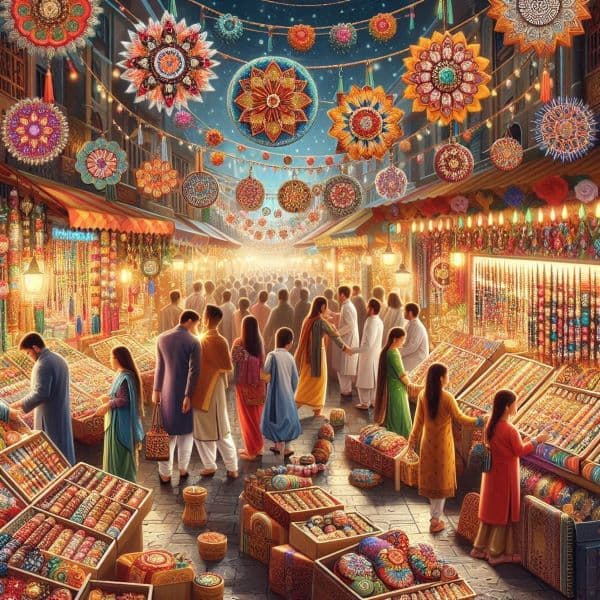
Purchase Rakhi
People purchasing Rakhi
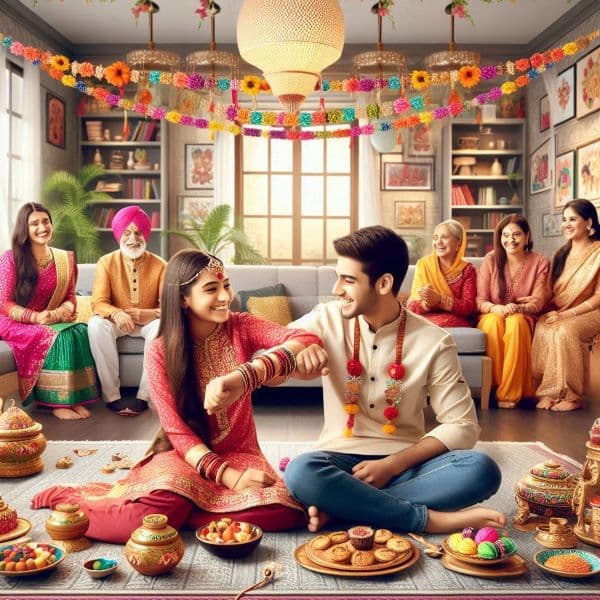
Sibling Bonding
Heartwarming sibling moments
Historical and Mythological Significance
Krishna & Draupadi
In Mahabharata, Lord Krishna protected Draupadi when she tied a piece of her sari to his wounded finger, treating it as a Rakhi.
Rani Karnavati
Rani Karnavati of Mewar sent a Rakhi to Emperor Humayun seeking protection, demonstrating Rakhi's protective significance in history.
Explore Other Festivals
Discover the rich cultural heritage of India through its diverse festivals
Modern Celebrations
Virtual Celebrations
Siblings separated by distance celebrate through video calls, e-rakhis, and online gift deliveries.
Global Observance
Celebrated worldwide by Indian diaspora, promoting cultural unity and traditional values globally.
Inclusive Celebrations
Extended to cousins, friends, and non-biological siblings, celebrating all forms of protective bonds.